
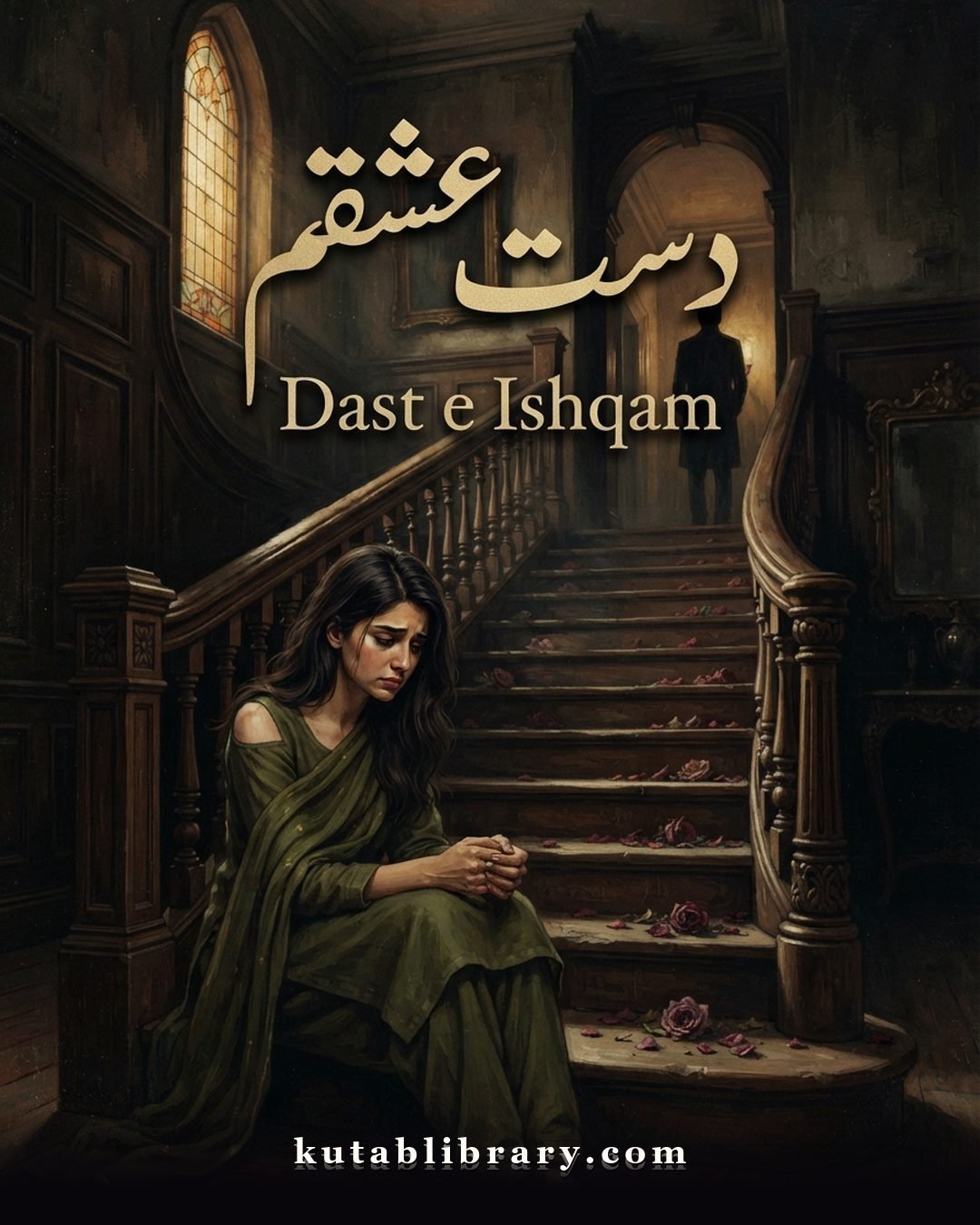
| Novel Name | Dast e Ishqam |
| Author | Rimsha Hayat |
| Language | Urdu |
| Genre | Rude Hero, Emotional, Cousin Based Romance |
| Also Known By | The Hand of Love |
| PDF Available | Yes |
Dast e Ishqam Urdu novel by Rimsha Hayat. A cousin based story where love arrives wrapped in cruelty, and the heroine has to survive the one person she trusted. Available to read online or download as a PDF.
There are novels you read for the romance, and then there are novels that grab you by the collar and force you to feel everything the characters feel. Dast e Ishqam by Rimsha Hayat belongs to the second kind. With a rude, unpredictable hero, a heroine trapped in impossible circumstances, and a family where loyalty is always conditional, this cousin based story hits harder than most novels in its category. Rimsha Hayat, who gained early fame through her debut novel Eid Ka Chand, proved with this story that she could handle darker, more emotionally layered narratives with equal command.
Main Characters
- Adeem: The male lead. Adeem is not the kind of hero readers fall for easily. He is controlling, deceptive, and emotionally ruthless. As Kanzil’s cousin, he holds a position of closeness that makes his cruelty even more dangerous. His actions drive the central conflict of the novel, and his willingness to harm the people closest to him makes him one of the most intense characters in the story.
- Kanzil (also written as Kunzal): The female protagonist. Kanzil is a young woman whose life spirals into chaos after her relationship with Adeem takes a devastating turn. She faces public shame, family anger, and physical harm, yet she endures it all with a quiet resilience that defines her arc throughout the novel. Her pregnancy becomes the center of a storm that tears her family apart.
- Shaista: Kanzil’s mother. A woman burdened by the fear of social judgment, Shaista reacts to her daughter’s situation with anger rooted in helplessness. She worries about the family’s honor, especially in the shadow of her late husband’s reputation. Her relationship with Kanzil is strained, caught between a mother’s instinct to protect and the weight of societal expectations.
- Ranam: Kanzil’s sister. Ranam is deeply affected by what happens to Kanzil and serves as an emotional anchor during the most painful moments of the story. Her presence brings a sense of genuine family bond into an otherwise fractured household.
- Sidra: The primary antagonist among the supporting cast. Sidra is Kanzil’s peer who thrives on creating trouble. When she overhears the truth about Kanzil’s pregnancy, she wastes no time spreading the news throughout the household, turning private pain into public scandal. Her actions add fuel to an already burning situation.
Story Summary
Dast e Ishqam, which translates to “The Hand of Love,” is a title that carries a deep irony. The love at the center of this story does not protect. It wounds, deceives, and leaves scars that take the entire novel to heal.
The story is built around the complicated relationship between Adeem and Kanzil, two cousins whose connection goes far beyond family ties. Adeem is not a man who expresses affection in any recognizable way. He is possessive without being protective, close without being kind. His behavior toward Kanzil swings between forced intimacy and calculated cruelty, leaving her constantly uncertain about where she stands.
The turning point arrives when Kanzil discovers she is pregnant. In any other story, this might be a moment of hope or new beginnings. Here, it becomes a disaster. Kanzil is unmarried, and in the world this novel is set in, that single fact is enough to destroy a family’s standing. When Shaista, her mother, learns the truth, her reaction is not compassion but panic. She thinks of her dead husband, of what people will say, of the shame that will follow the family name. Her voice carries more fear than fury, but to Kanzil, it feels like rejection from the one person who should have stood by her.
Sidra, who happens to be standing close enough to hear the confrontation, seizes the moment. She carries the news through the house like a weapon, making sure everyone knows before Kanzil has any chance to explain or seek help. The scandal spreads, and Kanzil’s world shrinks to the size of the room she hides in.
Adeem’s role in all of this is not one of support. In one of the novel’s most disturbing scenes, he lures Kanzil with false warmth, speaking to her in a tone that almost sounds caring, before pushing her down a staircase. The fall leaves Kanzil lying in a pool of blood while Adeem walks away with a smile. It is Ranam and Shaista who rush to her side, horrified, while Adeem disappears from the scene without a trace of guilt.
This moment splits the novel into two emotional halves. Before the fall, the reader can still hope that Adeem’s behavior might change, that somewhere beneath his harshness there is something redeemable. After the fall, the story becomes about survival. Kanzil’s journey shifts from trying to understand Adeem to trying to survive him.
As the narrative unfolds, the novel explores how each character processes the aftermath. Shaista is torn between shame and the slow realization that her daughter needs her more than the world’s approval does. Ranam steps into a role of quiet strength, supporting her sister when others turn away. And Kanzil herself begins to rebuild, not with grand gestures, but with the stubborn refusal to let the worst moment of her life become the definition of who she is.
The story does not rush toward forgiveness or neat resolution. Rimsha Hayat allows the emotional damage to sit with the reader, showing how betrayal from someone you trusted changes everything, your relationships, your sense of self, and your ability to love again. The novel asks difficult questions about honor, family loyalty, and whether love that comes wrapped in violence can ever truly be called love at all.
By the time the story reaches its ending, the characters have been reshaped by their experiences. The healing is slow, imperfect, and earned through pain rather than given freely. That honesty is what makes Dast e Ishqam stand apart from lighter cousin based romances.
Central Themes
- Betrayal Within Trusted Relationships: The novel’s most powerful thread is the destruction caused by someone who should have been a source of safety. Adeem’s betrayal is devastating precisely because of how close he is to Kanzil.
- Family Honor Against Compassion: Shaista’s struggle between protecting her family’s reputation and protecting her daughter highlights a tension many readers will recognize from real life.
- Survival After Trauma: Kanzil’s arc is not about romance. It is about finding the will to stand again after being broken by someone who was supposed to care.
- The Power of Gossip and Social Cruelty: Sidra’s role in the story shows how quickly private suffering can be turned into public entertainment, and how much damage a single loose tongue can cause.
- Slow, Imperfect Healing: The novel does not offer instant recovery. It shows that emotional healing is messy, nonlinear, and deeply personal.
Why Readers Love This Novel
- No Softening of the Hard Parts: Rimsha Hayat does not look away from the ugliest moments, which is exactly why the emotional intensity feels real.
- A Heroine Who Endures: Kanzil earns respect not through rebellion but through endurance. Her quiet strength resonates with readers who have seen similar struggles in real life.
- The Cousin Dynamic Cuts Deeper: The closeness of family makes every betrayal hit harder, and that lifts the story above simpler romance plots.
- Supporting Characters With Their Own Weight: Ranam and Shaista feel fully realized rather than existing just to serve the main plot.
- Trauma Told Honestly: The novel explores shame and recovery without sugarcoating any of it, giving it a weight that stays with readers long after finishing.
Final Thoughts
Dast e Ishqam is not a comfortable read, and that is exactly what makes it worth reading. Rimsha Hayat has written a story that confronts the darker side of love and family with unflinching honesty. It does not glorify the rude hero or romanticize the pain. Instead, it shows the real cost of cruelty, the slow path to healing, and the quiet courage it takes to survive when the people who should love you become the source of your greatest suffering. For readers who want Urdu fiction that challenges them emotionally rather than simply entertaining them, this novel delivers in full.
More Novels to Read
- Junoon e Ulfat Complete Novel by Mehwish Ali: another cousin based saga where pride, obsession and revenge shape every relationship.
- You Are Mine Complete Novel by Zeenia Sharjeel: a possessive hero, a childhood nikah, and a heroine learning to write her own story.
2 Comments
[…] Dast e Ishqam Complete Novel by Rimsha Hayat. […]
[…] Dast e Ishqam Complete Novel by Rimsha Hayat: a darker take on possessive love, where the hero’s cruelty leaves scars the heroine has to outlive. […]